




India Today
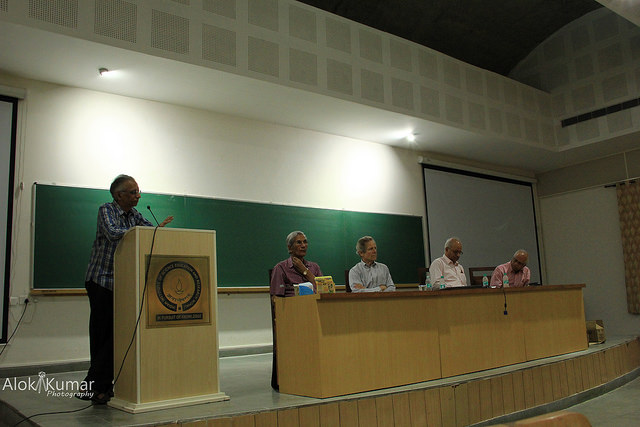
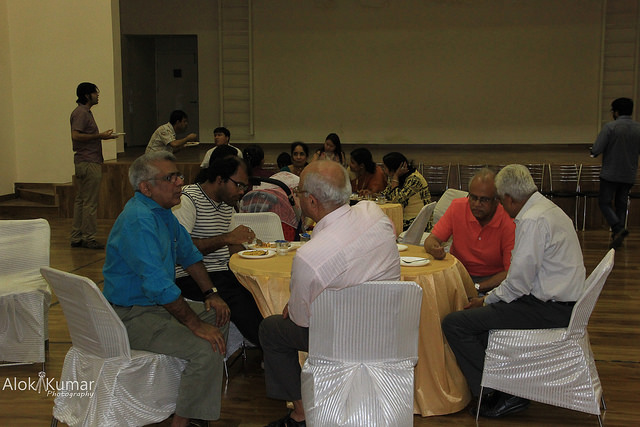
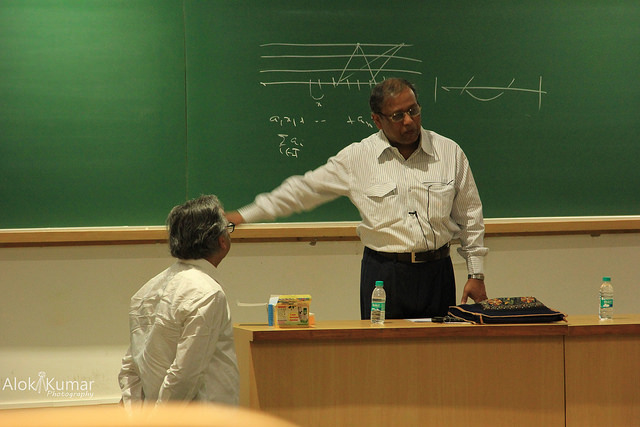
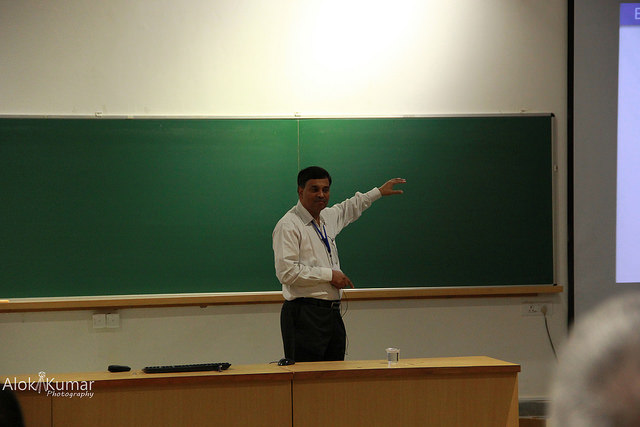
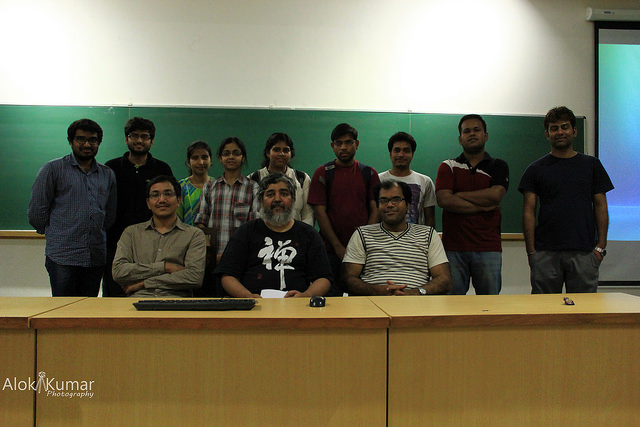
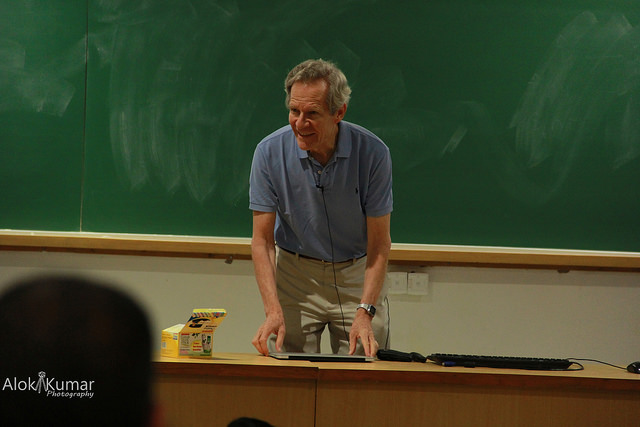
A one day meeting on contemporary issues in the country was organized on November 19, 2015. The speakers were Professor K. Satchidanandan, Dr. R. Umamaheshwari and Dr. Meera Nanda.
IISER Mohali and NABI Mohali jointly organized the national conference Arabidopsis 2016 during March 20–22, 2016 in the IISER Mohali campus. The meeting had many high quality talks focused on basic plant sciences involving Arabidopsis. In his opening address, the keynote speaker, Dr. Imran Siddiqi, emphasized the importance of the model plant Arabidopsis in discovering new mechanisms of gene regulation. He presented his findings related to gene regulation control in meiosis during pollen development.
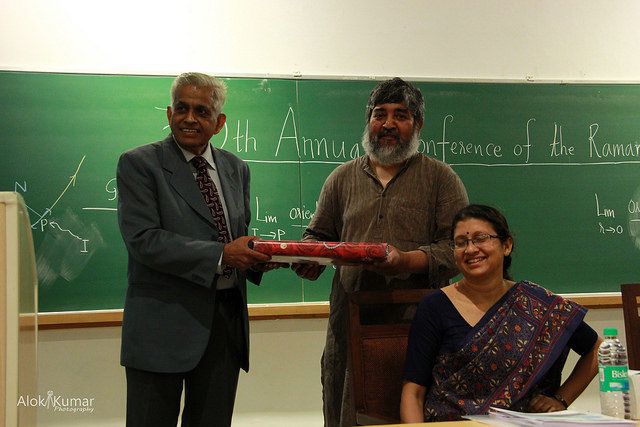
The Department of Mathematical Sciences at IISER Mohali hosted the 30th Annual Conference of the Ramanujan Mathematical Society during May 15–17, 2015. The meeting was attended by around 150 delegates. The meeting had several parallel sessions on various areas of mathematics. The highlight of this meeting was a one day workshop titled Some high points of Undergraduate Mathematics education. The meeting was preceded by a two day conference on Morse Functions and Handle-body Decomposition of Manifolds.
The International Conference on Gravitation and Cosmology (ICGC) was held at IISER Mohali during Dec.14-18, 2016. ICGC is a series of international meetings, held once in four years, and organized by the Indian Association for General Relativity and Gravitation (IAGRG). The first meeting was organized in 1987 in Goa and the meeting in 2015 was the 8th meeting in the series.
The year 2015 was the centenary of Einstein’s general theory of relativity. A special session was organized in the conference to mark the centenary and the contribution of Indian relativists.
The program of the conference consisted of twenty plenary lectures on different aspects of gravitation like gravitational waves, cosmology, quantum gravity, etc. There was a public lecture for general audience. There were three parallel sessions on (1) Classical Gravity and Gravitational Waves, (2) Cosmology, and, (3) Quantum Gravity and Early Universe. More than fifty talks were given in the parallel sessions. More than thirty papers were presented as posters.
A total of 160 participants attended the conference. More than fifty participants from different universities and institutes all over the world made up the international component of the conference. The presentations from the conference and other details are available at http://www.icgc2015.in/
Professor J. S. Bagla was convener of the local organization committee with Drs. H. K. Jassal and K. P. Yogendran as members. The scientific organization was managed by seventeen member SOC with Professors Sukanta Bose and J S Bagla as co-chairs.
The German House for Research and Innovation - DWIH New Delhi, a consortia of leading German research institutes and universities and IISER Mohali organised a one day workshop on August 22, 2015 entitled "Higher Education and Research Opportunities in Germany" at the Indian Institute of Science Education and Research (IISER) Mohali. The event’s objective was to apprise young Indian scientists and researchers about research and training opportunities available to them at German institutions. The event was co-ordinated by Dr. Vinayak Sinha on behalf of IISER Mohali. IISER Mohali PhD students helped provide all logistical support to the DWIH and assisted with the registrations. The sessions were attended by about 500 post-graduate students, doctoral students, researchers as well as faculty and senior scientists from the member institutions that form the Chandigarh Region Innovation and Knowledge Cluster (CRIKC).
In his introductory remarks, Mr. Stephan Lanzinger, Counsellor and Head of Science & Technology Section
at the German Embassy in India spoke at length on the Indo-German cooperation in Science and Technology. Professor Sanjay Mandal, Coordinator, Opportunity Cell IISER Mohali then introduced the audience to the IISER curriculum, system and vision. This was followed by individual presentations made by the DWIH consortium
members such as the German Research Foundation (DFG), German Academic Exchange Service (DAAD), Freie 21 Universität Berlin, University of Cologne (UoC), University of Göttingen (UoG), Heidelberg Centre South Asia (HCSA), Forschungszentrum Jülich and Technical University of Munich (TUM), who highlighted specific higher education and research opportunity programs fostered by their institutes in India. Following the presentations, the students had direct interaction with the consortium members regarding further queries on the application processes and research opportunities. Dr. Alexander P Hansen, Director, DFG India Office delivered the vote of thanks and expressed his gratitude to IISER Mohali for the excellent organization of the workshop.
A GAIN course on Emerging and Prevalent Infections : Our preparation to tackle was conducted from January 27, 2016 to February 6, 2016 at IISER Mohali in collaboration with a renowned international viral immunologist Lindsey Young distinguished Professor Barry T Rouse of the University of Tennessee. The national faculty who delivered lectures during the course were Drs Sharvan Sehrawat (IISER Mohali), Arunika Mukhopadhyay (IISER Mohali), Satish Devdas (ILS, Bhubaneswar), Javed N Agrewala (IMTECH, Chandigarh), Pardip Sen (IMTECH, Chandigarh), Rajeev Kaul (Delhi University South Campus, Delhi) and Bhuvanesh Kumar (DIHAR Base Lab, Chandigarh). The aim of the course was to educate participants on burning issues related to emerging and prevalent infections as to how effectively these diseases could be managed to minimize destruction of life. Major topics covered during the course include biology, epidemiology and pathogenesis of viral, bacterial and parasitic infections, viruses as factor in cancers and autoimmune diseases, tumor virology, recent developments in technologies for achieving timely diagnosis, production of vaccines and therapeutics. The number of participants was 35 that include both from within and outside IISER Mohali. Graduate and postgraduate students, post-doctoral fellows, young faculties from different universities, biomedical and veterinary scientists participated in the course.
IISER Mohali organized jointly with the Santa Fe Institute (SFI), USA, the first India Complex Systems Winter School, where 61 participants from Australia, Bangladesh, China, France, Hungary, Mexico, New Zealand, The Netherlands, UK, USA and India participated. Given the interdisciplinary nature of the topic, participants ranged from young faculty in management studies, policy research to undergraduate students in biology and computer science. The intensive two-week course was taught by 11 faculties from different Institutions in USA and associated with the SFI, and 5 from India. The aim of the course was to introduce the methodology to study complex behavior in mathematical, physical, living, and social systems. The theoretical lectures consisted of nonlinear dynamics, network theory, statistical physics and complex networks, computational complexity, agent based computational economics, ergodicity economics, econophysics, social network analysis of human behavior, cognitive science and social minds, evolution of gene networks, microbial ecology, and infectious disease. There were extensive discussions among the participants and faculty, who also organized evening tutorials and discussions on relevant papers and mathematical tools. Professor Somdatta Sinha was the course director.

International Workshop on Critical Geographies of the Himalayan Region held at IISER Mohali on October 07-08, 2016.
International workshop on ’Learning from the Utopian City’ was held at IISER Mohali from February 28th and 29th, 2016. The workshop brought together Indian and international academics, policy makers, bureaucrats, urban activists and NGOs on the same platform to deliberate upon the contested histories and imagined futures for the city of Chandigarh. Ideas of Chandigarh as a ’heritage city’ and as ’a smart city’ were examined. The workshop was part of a larger series of workshops conducted in India (at Varanasi, Navi Mumbai and Nashik) and a conference at the University of Leeds, UK. They were part of a project on Utopian Cities funded by the Arts and Humanities Research Council (AHRC), UK and Indian Council of Historical Research (ICHR). Dr. Anu Sabhlok is the India PI for this project and Dr. Ayona Datta (University of Leeds) is the UK PI.
Click here for a brief report
IISER Mohali, Knowledge city, Sector 81, SAS Nagar, Manauli PO 140306
Telefax : 2240266, 2240124
+91 - 172 - 2240266